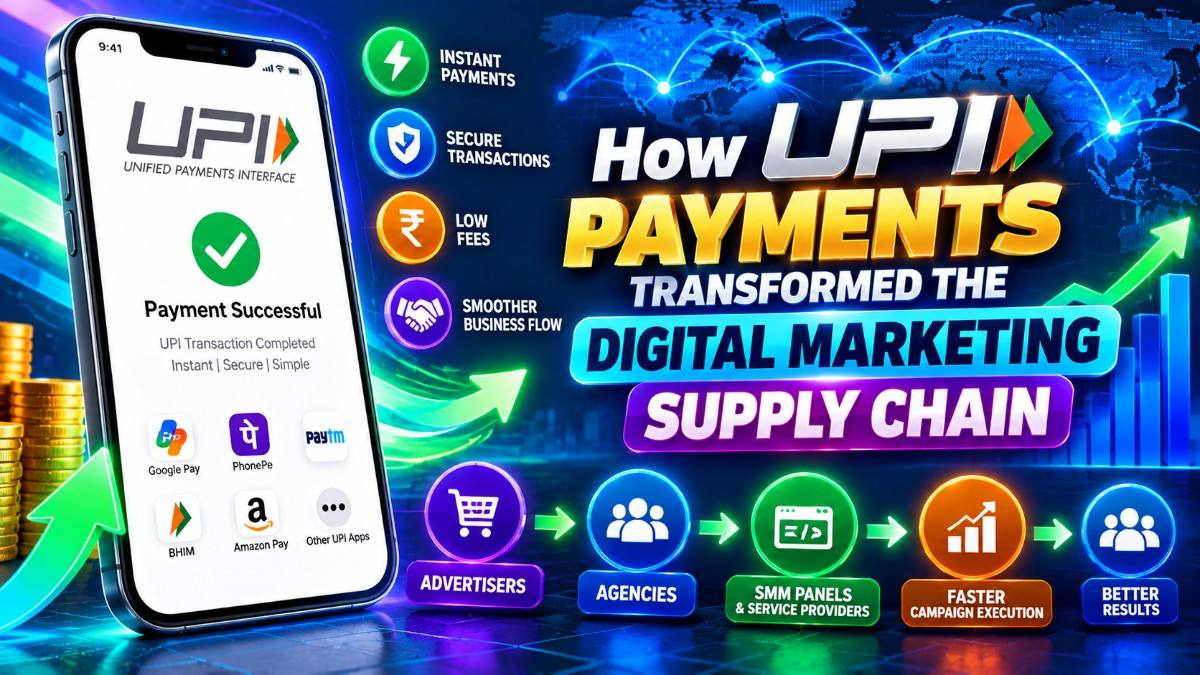
1. The Legacy Problem: Forex and Gateway Friction
Before the widespread adoption of domestic payment rails, Indian marketing agencies relied on international gateways to procure wholesale digital services. This created a massive bottleneck in the supply chain.
Every time an agency funded its operational wallet, it absorbed a layered tax: currency conversion rates that favored the banks, cross-border transaction fees, and gateway processing surcharges. These hidden costs severely eroded profit margins. Shifting to localized platforms eliminated these structural inefficiencies overnight, bringing the true wholesale cost directly to the reseller.
2. Real-Time Liquidity for Agency Scaling
Digital marketing campaigns are highly time-sensitive. If a client’s content requires an immediate surge in engagement velocity to trigger platform algorithms, the agency cannot wait 24 to 48 hours for a traditional bank wire or crypto network confirmation to clear.
UPI solves this by utilizing direct bank-to-bank webhooks. The moment a transaction is initiated via QR code, the dashboard’s server pings the Unique Transaction Reference (UTR) and credits the wallet instantly. This uninterrupted flow of capital ensures that high-volume operations never experience downtime due to financial bottlenecks.
3. Automating the Supply Chain via API
With liquidity guaranteed through frictionless payments, agencies can focus entirely on automation. A robust fulfillment provider isn't just a storefront; it acts as the backend engine for the agency's entire operation.
By integrating a primary provider's REST API into their own retail websites, resellers create a hands-free fulfillment loop. When an end-user purchases automated SMM services from the retail agency, the API instantly deducts from the pre-funded UPI wallet and dispatches the order to the delivery servers without any human intervention required.
4. Clean Accounting and Domestic Compliance
Scaling an agency also means scaling its accounting complexity. Processing hundreds of micro-transactions through offshore payment processors creates a nightmare for GST reconciliation and annual financial audits.
Operating strictly on domestic financial rails means every Rupee spent on wholesale services is easily tracked, properly invoiced, and legally compliant within the Indian banking ecosystem. This clean paper trail protects the agency during audits and simplifies input tax credit claims.