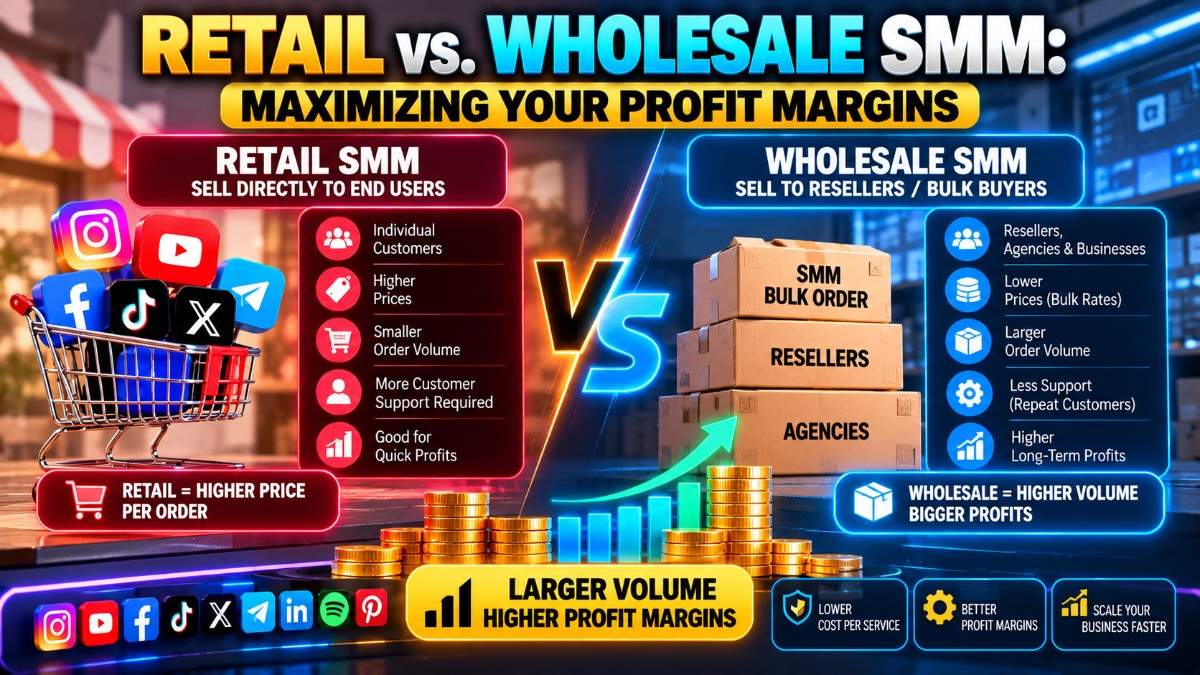
1. Understanding the Retail vs. Wholesale SMM Divide
When launching a social media growth service or digital marketing agency, entrepreneurs encounter two distinct types of fulfillment dashboards: retail panels and wholesale panels.
Retail panels cater directly to individual end-users, marking up service prices to capture retail profits. Wholesale panels, on the other hand, operate as the primary backend engine, supplying baseline rates to agencies, media buyers, and independent resellers who manage high-volume client portfolios.
2. The Hidden Cost of Reselling Through Secondary Brokers
Many beginner resellers make the mistake of partnering with secondary retail brokers—panels that simply copy services from other providers and add an extra financial layer on top.
3. Maximizing Profit Margins Through Direct Wholesale Arbitrage
Connecting your business directly to a primary provider unlocks true wholesale arbitrage. When you procure services at foundational rates, you control your own retail pricing structure.
This direct relationship allows you to price your retail offerings competitively while retaining wide profit margins on every transaction. Furthermore, direct API integration ensures that order requests transmit instantly to delivery servers without queuing delays.
4. Building a Scalable Agency Model with Automated Infrastructure
Maximizing profitability requires more than just low base rates; it demands operational efficiency. Sustainable agencies combine wholesale pricing with automated API synchronization and instant local payment rails (such as UPI and Paytm).
By automating order fulfillment and eliminating currency conversion friction, agency founders free up valuable working capital and operational hours, allowing them to focus entirely on scaling client acquisition.