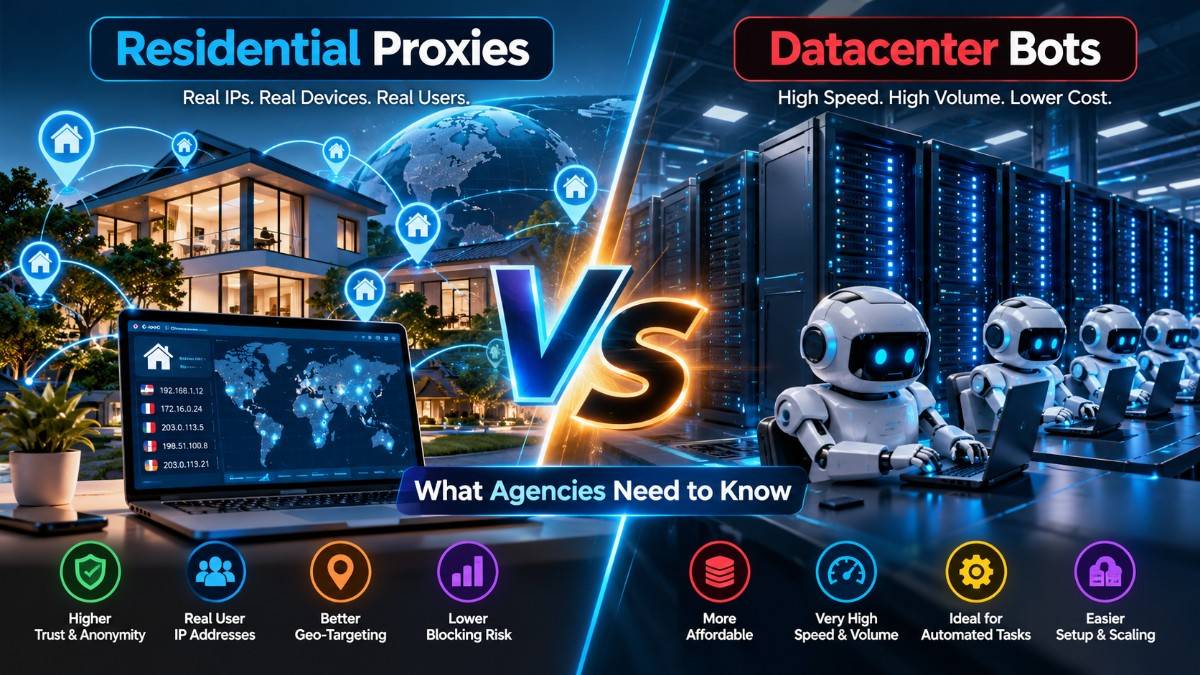
1. The Core Infrastructure Difference: Residential vs. Datacenter
When evaluating wholesale fulfillment providers, agency founders often focus entirely on service pricing while ignoring the underlying technical architecture. Behind every digital engagement delivery lies an IP routing system that determines whether the action appears authentic or synthetic to social media security filters.
The two primary routing methods—datacenter IP blocks and residential proxy networks—behave entirely differently when interacting with modern machine learning algorithms used by Meta, YouTube, and Telegram.
2. Why Datacenter IP Blocks Trigger Platform Bans
Datacenter bots operate from static server racks housed in commercial cloud data centers (such as AWS, DigitalOcean, or Azure). These servers maintain fixed IP ranges that are publicly cataloged on global registry databases.
3. The Algorithmic Advantage of Residential Node Routing
In contrast, residential proxy routing distributes engagement requests through authentic consumer internet service providers (ISPs) across mobile and broadband networks.
Because each action originates from a genuine residential IP address complete with authentic browser fingerprints and browsing histories, platform security filters cannot distinguish the delivery from organic human activity. This ensures high retention rates and smooth algorithmic integration.
4. Protecting Client Retention and Maximizing Agency ROI
For a digital marketing agency, using unstable offshore bot scripts leads to high client churn. When engagement metrics vanish 48 hours after delivery due to security sweeps, clients demand refunds and terminate contracts.
Investing in robust, residential-routed infrastructure eliminates drop-off anxiety. Stable execution protects brand reputation, satisfies algorithmic guidelines, and allows agencies to build long-term, profitable retainer relationships.