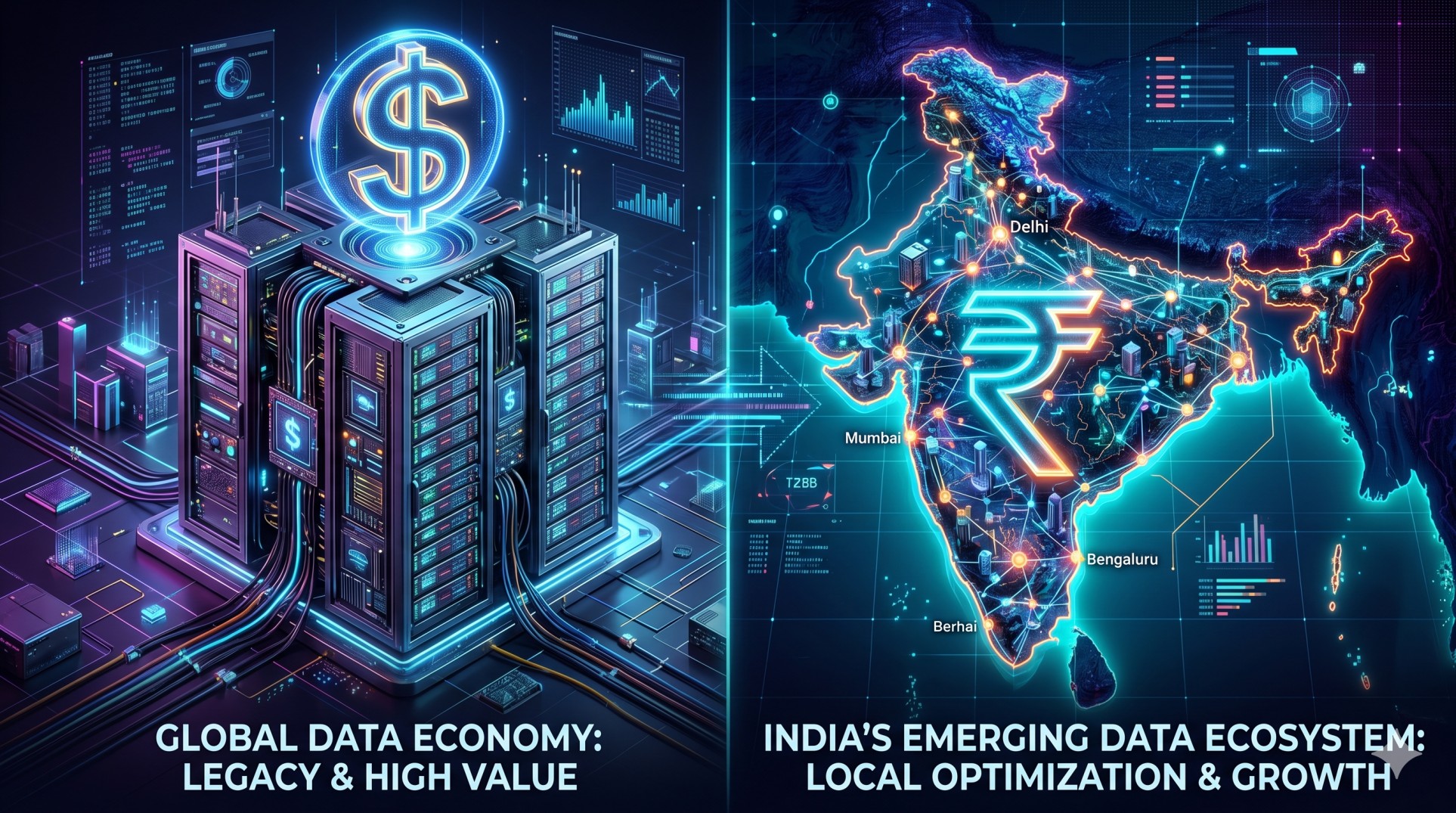
Why Are Indian SMM Panels Cheaper Than Global Panels? The 2026 Economic & Infrastructure Breakdown
Why are Indian SMM services cheaper?
Indian SMM panels are significantly cheaper than global panels due to four primary factors:
- Digital Geo-Arbitrage: Lower operational, engineering, and data-center costs in India compared to Western tech hubs.
- API Wholesaling: Indian providers often build the root delivery nodes, acting as wholesale distributors, whereas global panels operate as high-margin retail resellers.
- Currency Valuation: Transactions localized in INR bypass heavy international conversion fees and USD inflation markups.
- Localized Network Infrastructure: The widespread availability of affordable broadband and mobile-residential proxy networks in India reduces the overhead required to maintain high-retention digital engagement.
In the digital marketing landscape of 2026, scaling an agency or a brand requires massive infrastructure. But when digital strategists and marketing agencies begin sourcing their backend delivery systems, they inevitably encounter a massive pricing disparity: services originating from India are a fraction of the cost of those hosted in the United States, the UK, or Europe.
A common misconception is that "cheaper means lower quality." In reality, the price difference has very little to do with the quality of the algorithmic engagement and everything to do with macroeconomics, software architecture, and the mechanics of the API supply chain.
Operating our core backend from the heart of India's tech ecosystem in Koramangala, Bengaluru, we have built the infrastructure that powers thousands of global agencies. Here is the definitive, data-driven breakdown of why the B2B marketing economy is fundamentally cheaper in India, and how smart agencies are leveraging this to maximize their profit margins.
1. The API Supply Chain: Wholesalers vs. Retail Resellers
To understand the price gap, you must first understand the architecture of the Social Media Marketing (SMM) industry. It operates exactly like a traditional supply chain.
Most global panels—especially those marketed heavily in the USA and Europe—do not actually own their delivery infrastructure. They are front-end retail websites. They utilize API connections to fetch services from primary source providers, mark up the prices by 300% to 500%, and sell them to end-users.
India is the global capital for root-level backend development. When you use a top-tier smm panel india, you are effectively bypassing the retail middlemen and connecting directly to the wholesale infrastructure. You are paying the raw computational and routing cost of the service, entirely stripped of the Western retail markup.
2. Digital Geo-Arbitrage and Operational Overhead
The cost of maintaining enterprise-grade servers, developing custom REST APIs, and providing 24/7 technical support is heavily dependent on geography.
If a tech company operates a panel infrastructure out of San Francisco or London, they are paying premium rates for server space, software engineers, and customer support staff. These massive operational overheads are directly baked into the cost of every thousand views or followers they sell.
In contrast, India’s tech infrastructure is world-class but comes with significantly lower operational overhead. The cost of leasing advanced mobile-residential proxy nodes and hiring elite network engineers in Bengaluru or Hyderabad is substantially lower than in Silicon Valley. This concept, known as "Digital Geo-Arbitrage," allows Indian providers to engineer mathematically identical algorithmic velocity at a fraction of the consumer cost.
3. Platform-Specific Infrastructure Costs
Different social media platforms require different types of routing infrastructure, and the Indian market naturally suppresses these specific costs due to the sheer scale of telecom adoption in the country.
Visual Algorithms and Mobile Nodes
In 2026, conquering recommendation feeds requires localized, high-retention interaction. Bypassing spam filters requires routing traffic through mobile-residential networks. Because India has one of the cheapest and most expansive mobile data infrastructures on the planet (with widespread 5G adoption), the cost of maintaining mobile nodes is incredibly low. This is why a premium Instagram SMM Panel operating out of India can deliver algorithmically safe Saves, Shares, and Impressions for pennies compared to European networks.
Video Monetization at Scale
Video platforms evaluate Average View Duration (AVD) above all else. Generating high-retention watch hours requires massive computational bandwidth. Thanks to the density of high-speed fiber optics across Indian tech hubs, maintaining the server capacity for a dedicated YouTube SMM Panel costs far less to run. Agencies can clear monetization thresholds safely without the inflated costs required to run the exact same data-heavy operations in North America.
4. The Economics of Community Building
Building massive digital communities requires a completely different architectural approach than video or visual engagement. Platforms designed for immediate communication and community scaling rely heavily on server density and account verification protocols.
Consider the infrastructure required for Web3, Crypto, and Fintech agencies trying to push their community to the top of global search rankings. They need to inject thousands of verified, Premium users into a channel to build trust signals. An advanced Telegram SMM Panel built on Indian software architecture can automate these Premium member integrations rapidly. Because the underlying cost of maintaining the software environments required to house these accounts is lower, the savings are passed directly to the agency.
Similarly, for local business scaling, an automated Facebook SMM Panel relies on geo-targeted Page followers and In-Stream ad-compliant video views. The engineering required to map these geo-targeted interactions is complex, but the volume of the Indian B2B market allows providers to scale the service efficiently, driving down the unit cost for global buyers.
5. Frictionless Payment Gateways and Currency Valuation
We cannot discuss global pricing disparities without addressing raw financial mechanics. The US Dollar (USD) and the Euro (EUR) carry immense weight. When global panels price their services, they factor in heavy international payment gateway fees, Stripe processing percentages, and cross-border tax implications.
Indian infrastructure providers operate primarily in INR (Indian Rupees). By utilizing localized banking ecosystems like UPI (Unified Payments Interface), IMPS, and direct B2B gateways, the transactional friction is reduced to zero. There are no exorbitant 5% international processing fees tacked onto every deposit.
Furthermore, because the root cost is calculated in INR, agencies purchasing from Western countries experience massive purchasing power parity. A marketing budget of $500 on a US-based retail panel might secure engagement for two clients. That exact same $500 funneled directly into Indian wholesale API infrastructure can comfortably scale the digital assets of twenty clients.
Conclusion: Upgrading Your Agency Tech Stack
The secret to scaling a highly profitable digital agency in 2026 is not charging your clients more; it is optimizing your backend delivery costs.
Indian SMM panels are not cheaper because they use inferior technology. They are cheaper because they represent the root level of the global digital supply chain, operating in an economy optimized for scalable tech infrastructure and frictionless financial transactions.
If you are tired of losing your agency margins to global retail resellers, it is time to connect directly to the source. Equip your business with the enterprise-grade API, algorithmic drip-feed pacing, and sub-second execution speeds that top-tier agencies demand.
Frequently Asked Questions (FAQ)
Do cheaper Indian SMM panels cause account shadowbans?
Price is not the trigger for shadowbans; bad routing is. A cheap global panel using data-center bot traffic will cause a shadowban. A cost-effective Indian panel utilizing mobile-residential proxies and algorithmic drip-feed technology is entirely safe and bypasses automated spam sweeps.
Why do some global panels claim their services are "higher quality"?
This is standard retail marketing. In 90% of cases, global panels are connected via API to the exact same Indian wholesale infrastructures. They claim "higher quality" to justify their 400% price markup to end-users.
Can international users fund accounts on Indian SMM platforms?
Yes. While local agencies benefit from zero-fee UPI gateways, premium Indian infrastructures support robust global payment methods, including secure cryptocurrency deposits (USDT, BTC) and verified international gateways, ensuring seamless cross-border funding.