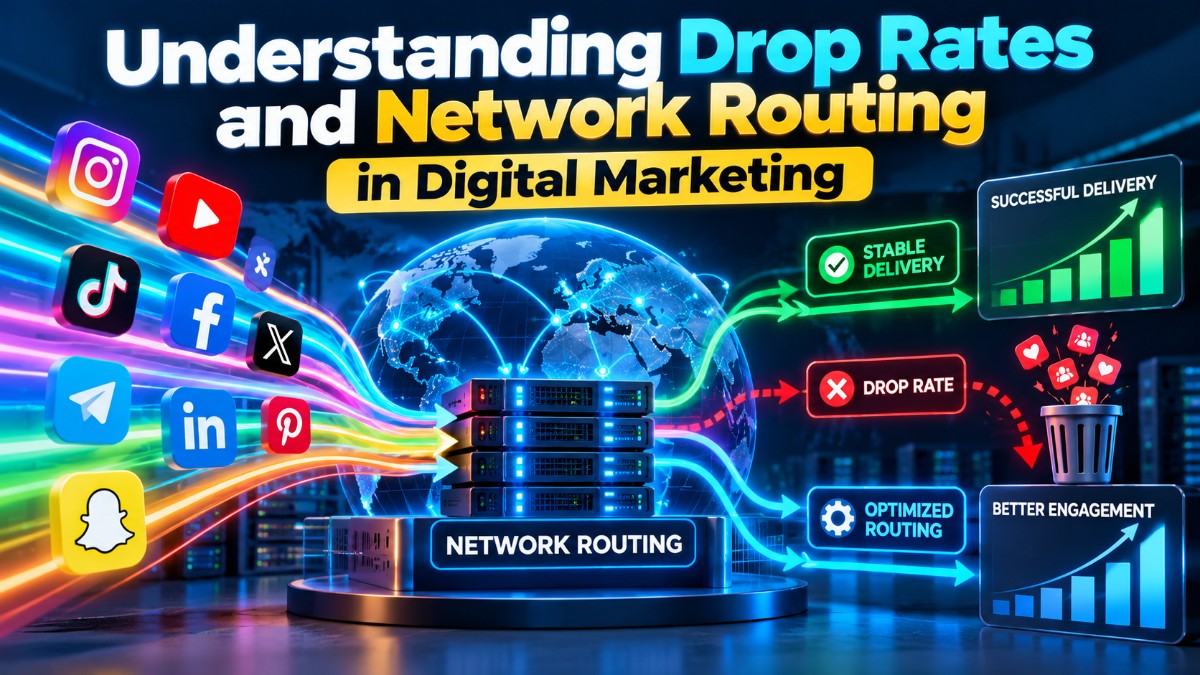
1. The Technical Anatomy of a Metric Drop
When a social media platform like Instagram, YouTube, or Telegram registers a new follower, view, or like, the interaction is initially written to a fast-access caching layer so the public counter updates immediately. However, the platform's backend anti-abuse engines run asynchronous batch audits every 24 to 72 hours.
During these database sweeps, machine learning classifiers analyze the metadata attached to every recent interaction. If the traffic logs exhibit anomalies in network origin or session behavior, the platform rolls back the counter, resulting in what agencies observe as a "drop."
2. How Platforms Use ASN and Subnet Filtering
Every IP address on the internet belongs to an Autonomous System Number (ASN), which identifies the organization that owns that block of addresses. Social media security systems categorize ASNs into two primary buckets: **Commercial Hosting/Transit** and **Consumer ISP/Mobile Carrier**.
3. Device Telemetry and Session Fingerprinting
Clean IP routing is only half the equation. Modern social platforms also inspect client-side telemetry—including TLS handshakes,User-Agent strings, screen resolution parameters, and behavioral cadence.
Enterprise-grade fulfillment infrastructure pairs distributed consumer ISP routing (4G/5G mobile nodes and home fiber connections) with authentic session emulation. Instead of hitting an API endpoint cold, the system simulates natural navigation paths—scrolling feeds, pausing on media, and executing interactions at randomized intervals that mirror genuine human usage.
4. Selecting Stable Routing Tiers for Agency Clients
Understanding network routing empowers agency owners to choose the right service tier for every campaign objective:
- Audit Service Descriptions: Always opt for tiers explicitly labeled with high-retention, non-drop, or guaranteed refill architectures for flagship client profiles.
- Avoid Instant-Spike Overload: Even clean residential nodes can look suspicious if 50,000 interactions hit a brand-new post in three minutes. Use staggered delivery speeds to keep network velocity natural.
- Leverage Refill-Backed Infrastructure: Pair clean routing with automated refill warranties so that even if a platform updates its filtering heuristics mid-month, your client's metrics are automatically restored without manual intervention.