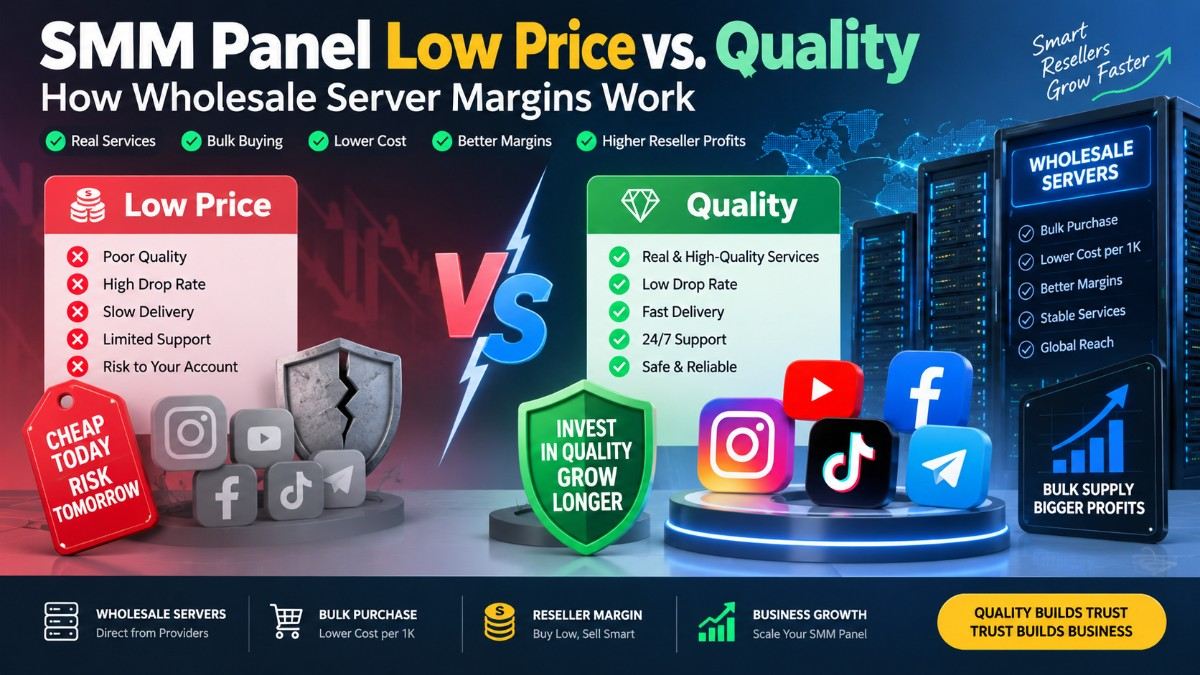
1. The Architecture of Low-Cost SMM: Primary Servers vs. Retail Brokers
The social media marketing supply chain operates similarly to traditional wholesale commerce. At the very top are primary server operators—infrastructure companies that manage massive networks of localized residential proxies, database clusters, and algorithmic delivery protocols.
At the bottom are retail brokers (white-label panels). These operators do not own any delivery servers. They simply rent a dashboard interface, connect to a primary provider's API, and resell the identical services at a significant premium to freelance marketers and small businesses.
2. How Intermediaries Inflate Prices
The biggest mistake new B2B resellers make is purchasing from a third or fourth-tier retail broker. In these "API chains," Panel A buys from Panel B, who buys from Panel C, who finally buys from the source. At every single node, a markup is added.
3. Bandwidth vs. Scraping: Quality Over Disposable Blasts
While finding the absolute lowest price is tempting, pricing economics must be balanced with technical quality. There is a distinct difference between high-retention bandwidth routing and disposable scraping bots.
A service utilizing datacenter IP blasts might cost pennies, but the metrics will vanish during the next platform security sweep. High-retention infrastructure requires genuine residential proxy bandwidth and localized server nodes. These services cost slightly more than disposable bot blasts, but they yield a near 0% drop rate, ultimately saving agencies the cost and embarrassment of replacing lost metrics.
4. Reseller Margin Calculations
White-label digital agencies utilize these low-cost backend rates to structure highly profitable client retainers. By locking in primary wholesale pricing, they build a pricing architecture that supports aggressive front-end marketing.
The Enterprise Margin Blueprint: If your direct API cost for a localized engagement bundle is ₹500, an agency typically bundles this with content curation and community management, billing the end client an "Authority Retainer" of ₹15,000/month. The low operational cost enables the agency to scale aggressively while preserving massive net profit margins.
5. Key Due-Diligence Metrics for Agencies
Before migrating your agency's fulfillment infrastructure to a new wholesale provider, verify these specific technical benchmarks:
- Order Turnaround & Time to Start: Does the order initiate immediately via webhook, or does it sit in a manual queue?
- API Latency: Your provider’s API should consistently return JSON responses in <1.5 seconds. Slow latency will cause your own white-label frontend to crash during peak ordering hours.
- Automated Drop Tracking: Do they offer 30-day, 90-day, or 365-day automated refill triggers, or do they rely on outdated manual support tickets?