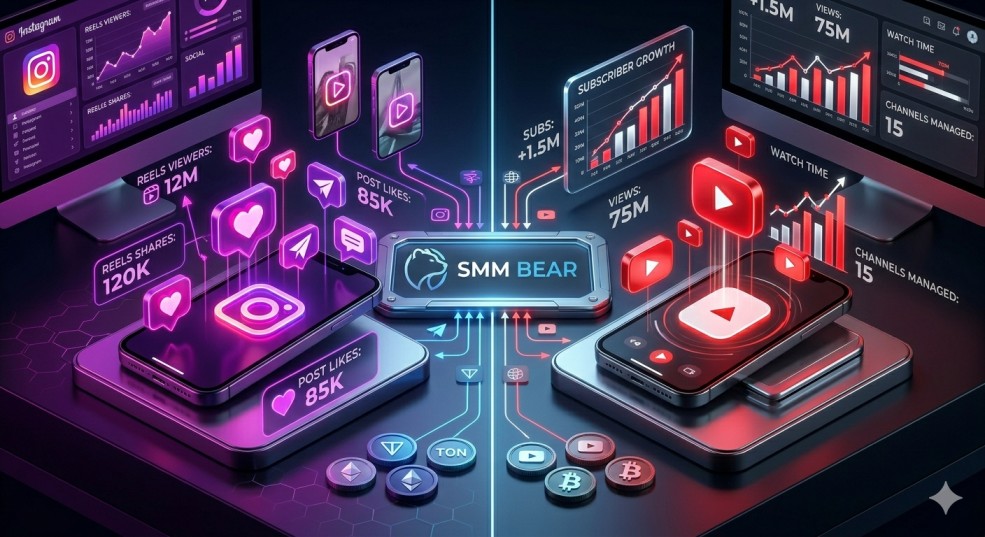
Instagram vs. YouTube: Where Should Your Indian Agency Invest in 2026?
As we navigate through 2026, the digital marketing landscape in India has reached unprecedented levels of saturation and sophistication. With over 800 million active internet users in the country, digital agencies are no longer tasked with simply "getting a brand online." The mandate has shifted to capturing hyper-fragmented attention and delivering measurable, scalable Return on Investment (ROI).
For agency owners and digital strategists, budget allocation is the ultimate chess game. When a new client signs on—be it an emerging D2C brand, a real estate developer, or a local B2B enterprise—the most critical strategic decision is platform selection. The two undisputed titans of the Indian digital ecosystem are Instagram and YouTube. But which platform offers the best trajectory for client scaling in 2026?
The answer isn't a simple coin toss. It requires a deep understanding of algorithmic behavior, content shelf-life, and how leveraging a professional indian smm panel can accelerate results on either front. Let’s break down the strategic advantages of both platforms and how modern agencies must adapt.
The Case for Instagram: Speed, Virality, and Visual Commerce
Instagram has firmly established itself as the digital mall of India. It is fast, highly visual, and engineered for impulse discovery. For digital agencies, Instagram is the primary battleground for brand awareness and direct-to-consumer (D2C) sales.
1. Short-Form Video Dominance (Reels)
The algorithmic bias toward Instagram Reels remains the most powerful organic reach tool available. Reels act as a "top-of-funnel" magnet, capturing users who do not yet follow the brand. Because the algorithm prioritizes initial engagement velocity (how fast a Reel gets likes and shares in its first hour), agencies have a distinct window to trigger virality.
2. The "Aesthetic" Authority
For lifestyle, fashion, food, and fitness clients, Instagram acts as the definitive portfolio. A visually cohesive grid serves as immediate social proof. However, a beautiful grid with 150 followers creates the "Zero Trust" paradox. This is where agencies utilize a premium instagram smm panel. By strategically injecting high-retention followers and localized post likes, agencies establish the baseline authority required to convert organic profile visitors into actual customers.
3. Rapid Conversion Cycles
With features like interactive stories, direct DMs, and integrated shopping tags, the journey from discovery to purchase on Instagram can happen in under three minutes. For agencies running promotional campaigns, flash sales, or lead-generation forms, Instagram provides the fastest conversion cycle.
The Case for YouTube: Search Authority and Evergreen ROI
If Instagram is a high-speed digital mall, YouTube is a colossal, permanent library. YouTube operates uniquely because it is not just a social network; it is the world’s second-largest search engine. For agencies playing the long game, YouTube offers unparalleled depth.
1. Evergreen Content Shelf-Life
The fundamental difference between the platforms is content lifespan. An Instagram Reel has an average shelf-life of 48 to 72 hours before it vanishes into the algorithmic abyss. A well-optimized YouTube video, however, can generate traffic, leads, and ad revenue for years. This makes YouTube an incredible asset for B2B clients, educational brands, and high-ticket service providers where the customer requires deep trust and education before converting.
2. Deep Audience Connection
While short-form video captures attention, long-form video builds parasocial relationships. When an Indian user watches a 15-minute podcast or a detailed product breakdown, the level of brand affinity generated far exceeds a 15-second scrolling interaction.
3. The Algorithmic Thresholds
YouTube's algorithm is notoriously difficult to break into for brand-new channels. The platform demands high Click-Through Rates (CTR) and massive watch hours before it recommends content to wider audiences. To bypass this agonizing "sandbox" phase, elite agencies leverage a specialized youtube smm panel. By carefully securing initial watch hours, organic-looking subscribers, and native views, agencies can push a client's channel past the monetization threshold and trigger YouTube's organic recommendation engine much faster than traditional methods.
The 2026 Agency Verdict: Which to Choose?
Choose Instagram if your client needs:
- Rapid brand awareness and viral potential.
- Impulse purchases and direct D2C sales.
- A highly visual, aesthetic-driven brand identity.
Choose YouTube if your client needs:
- Long-term SEO benefits and evergreen search traffic.
- High-ticket lead generation requiring deep customer education.
- To build unshakeable industry authority and thought leadership.
The Omnichannel Mandate: Cross-Pollination
In reality, the most successful digital marketing agencies in 2026 do not choose one over the other. They execute a "Cross-Pollination Strategy."
This involves using YouTube for core, long-form anchor content (like podcasts, tutorials, or deep-dives). Agencies then chop this long-form content into dozens of micro-videos (Shorts and Reels) and distribute them aggressively across Instagram. The viral nature of Instagram is used to capture attention, while the depth of YouTube is used to retain and convert that attention.
However, running dual-platform strategies requires massive operational efficiency. Managing metrics, boosting content, and building social proof across multiple client accounts manually is a logistical nightmare.
Accelerating Agency Growth with the Right Infrastructure
To execute high-level strategies across both platforms simultaneously, Indian agencies are abandoning manual processes and fragmented retail tools. The industry standard in 2026 is centralizing operations through a wholesale smm panel india.
SMM Bear has emerged as the premier infrastructure partner for digital agencies for three critical reasons:
- Centralized API Automation: Whether you need to boost an Instagram Reel for a fashion client or push watch hours for a B2B YouTube channel, SMM Bear allows agencies to automate everything from a single, unified dashboard.
- Localized Algorithmic Safety: Global bot traffic destroys client accounts. SMM Bear prioritizes regional, localized node routing. This ensures that the social proof your clients receive aligns with their target Indian demographics, safely triggering localized Explore pages and Search recommendations without risking shadowbans.
- Wholesale Profit Margins: By bypassing retail middlemen, agencies access root-server pricing. This means you can provide superior metric growth to your clients while significantly increasing your agency's profit margins on every campaign.
Conclusion
The debate between Instagram and YouTube isn't about which platform is inherently "better"; it is about matching the platform's behavioral mechanics to your client's specific business goals. Instagram wins the sprint; YouTube wins the marathon.
For digital agencies, the true competitive advantage in 2026 isn't just knowing which platform to use—it is having the backend infrastructure to dominate both. By integrating SMM Bear into your agency workflow, you remove the friction of the "cold start," protect your clients with algorithm-safe engagement, and scale your operations with unprecedented efficiency. Stop executing manually, and start architecting scalable growth.

Frequently Asked Questions
Why do agencies use an Instagram SMM Panel for new clients?
Agencies use it to overcome the "Zero Trust" barrier. When a client launches a new brand, organic users are hesitant to follow an empty page. An SMM panel provides initial, high-retention social proof (followers and likes) that validates the brand, making real organic users much more likely to convert and engage.
How does a YouTube SMM Panel help with monetization?
YouTube requires channels to hit strict thresholds (like 4,000 watch hours and 1,000 subscribers) before enabling monetization and pushing content aggressively. A specialized YouTube panel allows agencies to safely generate these metrics for their clients, fast-tracking their entry into the YouTube Partner Program.
Is it safe to use an Indian SMM Panel for local businesses?
Yes, provided it is a high-quality, localized panel like SMM Bear. Generic global panels use foreign bot traffic, which triggers shadowbans. An Indian SMM panel routes engagement through regional nodes, ensuring the social proof looks authentic to the platform's security algorithms and perfectly aligns with the client's local target demographic.